What’s the best paper to print your fireworks photos on? We outline some great options.
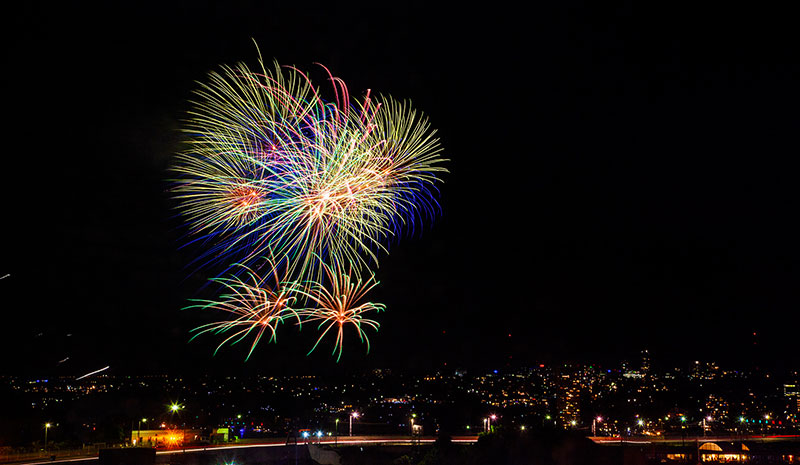
This image would print particularly well on metallic paper, which would bring out its details and subtle tones.
You’ve taken some stunning shots of the New Year’s fireworks displays and would like to have some prints to display on your wall – or in frames in your home or office. How do you capture the brilliant colours and the ways in which they contrast with the night sky to recreate the images you saw on the night? Choosing the right printing paper will make all the difference between an eye-catching picture and one that is easily ignored.
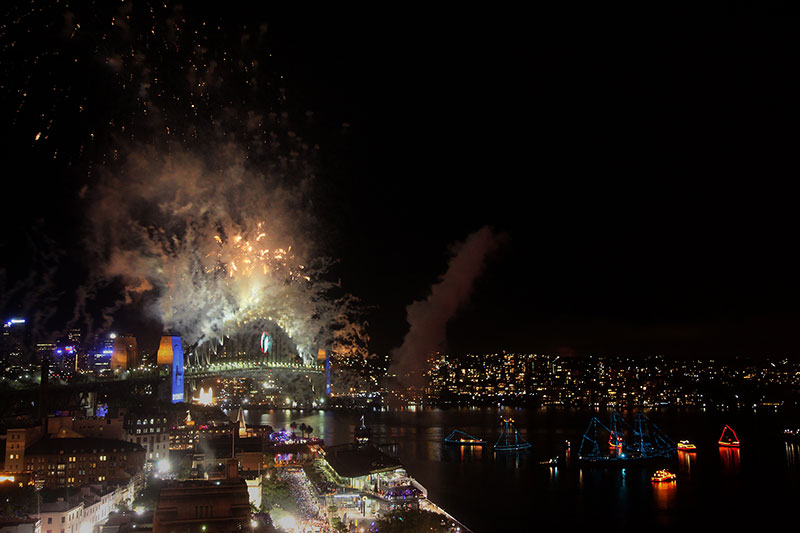
An image like this would look best when printed on a high-quality glossy paper.
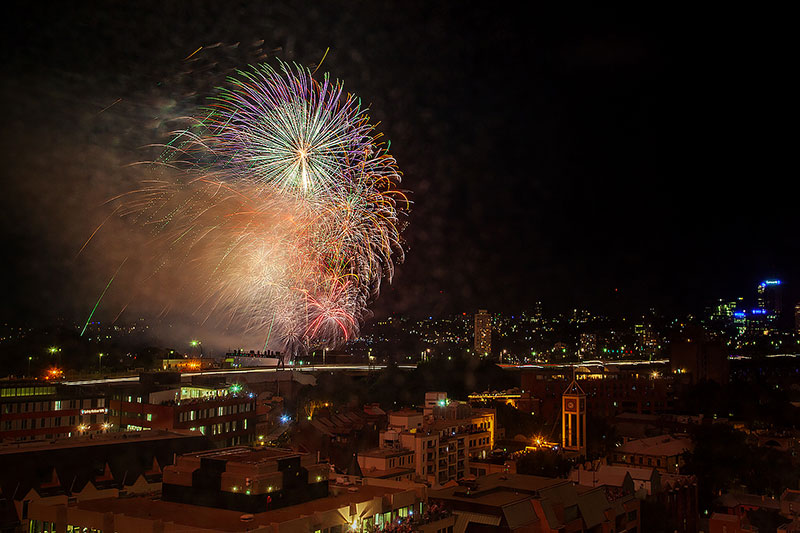
Printing this image on a metallic paper would emphasise the already saturated colours by contrasting them against the rich black background.
To some degree, your choice of printing paper will be determined by your printer. Some printers use dye-based inks, while others use pigment inks. Each ink type has particular advantages, although the differences between them may be quite subtle with the current crop of photo printers.
When you want to bring out bold contrast and rich saturation, glossy papers are often the most popular choice. The smooth, shiny surface of glossy photo paper makes details appear sharp and colours vivid, particularly if your printer uses dye-based inks. A few manufacturers produce high-gloss paper that is even shinier to emphasise these characteristics.

Dye-based inks tend to encompass a slightly wider colour gamut than pigment inks. However, prints made on glossy media with dye inks are much more vulnerable to finger-marking than those made with pigment inks. They can also produce specular reflections (glare) under directional lighting and suffer from ‘bronzing’, which shows up as a greenish bronze tone when the print is viewed from a shallow angle.
Because the dyes are absorbed into the surface layer on the paper, images printed with dye inks can generally be regarded as more ‘stable’ than pigment prints. This is because pigment prints on glossy media are susceptible to surface scratching and abrasion which can affect the overall integrity of the image.
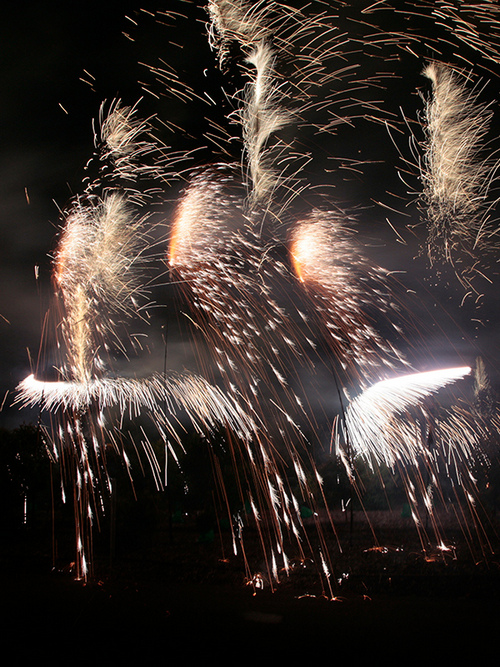
Shots like this can be printed on almost any kind of paper with a smooth surface. A baryta paper would be a good choice.
Gloss differential is another issue affecting pigment prints on glossy media. It shows up as patches of visible difference in the surface of the prints in areas where little or no ink has been laid down. Some manufacturers provide ink sets for their pigment printers that include a ‘gloss optimiser’ cartridge that lays down an even layer of resin across the entire surface of the print to cover up this problem.
If glossy media are your ‘thing’, there are two types to choose from: regular and metallic. Regular glossy papers range in reflectivity from super glossy through to lustre or pearl finishes, with the glossier surfaces being the most vulnerable to watermarking, specular reflections and bronzing.

The coatings on metallic papers contain tiny flecks of mica, which creates a shimmering, iridescent sheen. This adds an extra dimension to the image without being overly distracting so they can work well for scenes containing vibrant colours, deep blacks and high contrast, such as fireworks.
Metallic papers are normally sold through specialist outlets like camera shops. They come in glossy and satin finishes and are usually more expensive than standard glossy papers with similar physical specifications. They can be used with both dye and pigment inks but require specific printer settings for best results. Test prints are crucial as the metallic sheen can affect colour perception.
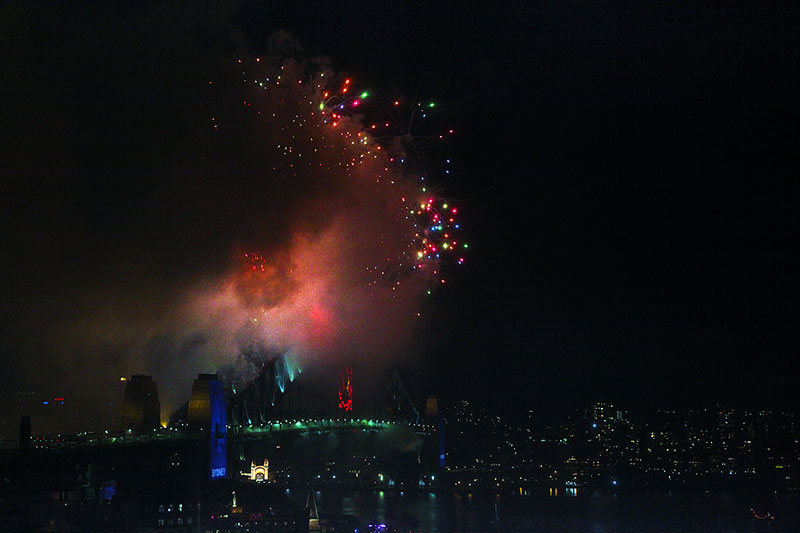
Atmospheric shots like this can print well on regular glossy paper or metallic media. A paper without optical brighteners could add a subtle warmth to the image tones.
The following glossy papers are available, listed in order of glossiness, based on the manufacturer’s description and specifications:
Epson Ultra Glossy Photo Paper 300 gsm: With increased whiteness, opacity and rigidity, Epson’s flagship photographic paper is 30% glossier than Premium Glossy Photo Paper.
Canon Pro Platinum Photo Paper (PT-101) 300gsm: Professional studio finish photo paper with six-layer construction and high optical density that supports wide-gamut colour reproduction.
Hahnemühle Baryta FB 350gsm: This is Hahnemühle’s punchiest and glossiest fibre-based ‘darkroom replacement’ style paper. Features low gloss differential and has a white value 104% (D65 2° 460 nm) due to optical brighteners.
Ilford Galerie Smooth Gloss 310gsm: The high-density, resin coated heavyweight base and smooth, bright white gloss finish creates the look and feel of a superior photographic print. Features the latest HDR optically clear coating and advancements in inkjet receiving layer design.
Canson PhotoGloss Premium RC 270gsm: The enhanced coating finish offers an exceptional Dmax as well as a wide colour gamut and a stunning gloss effect.
Epson Photo Paper 255gsm Premium Gloss: Features a new resin coating that provides a feel and texture almost identical to that of photographic media.
Permajet Gloss 271: A superior, resin coated, high gloss paper with a true photographic feel and finish. Compatible with Dye and Pigment inks, its instant-dry, UV protective, microporous super-coat provides water and fade resistance.
Harman Crystaljet Gloss RC 260 gsm: Designed to produce quick drying, high quality prints with dye or pigment inks, this paper has a smooth gloss finish that is water resistant and delivers good vibrancy, a broad tonal range and good shadow and highlight definition.
Ilford Galerie Gold Fibre Gloss 310gsm: With no optical brighteners, this traditional fibre-base photo paper can record a seamless transition between contrast, shadow detail and highlight areas.
Epson Traditional Photo 325 gsm: is a very bright white classic darkroom style paper with a semi-gloss surface. It contains optical brighteners to make the whites really pop, which offsets the deep rich blacks.
Canson Infinity Photo Lustre Premium RC 310gsm: The structured polyethylene and a microporous receiver layer of this acid-free paper has a bright white lustre finish that is optimised for pigment inks and compatible with dye inks.
The following metallic papers provide an alternative to glossy media for images with vibrant colours, deep blacks and abundant detail.
Hahnemuhle Photo Rag Metallic 340gsm is a silvery-shimmering FineArt inkjet paper with a specially formulated inkjet coating for FineArt use. Photo Rag Metallic is acid and lignin-free and contains no optical brighteners.
Permajet Titanium Glossy 300: A metallic photo paper with the look, feel and print quality of a metallic surface due to high silver pigment content. The high gloss surface produces great detail and clarity and delivers stunning visual impact, a wide tonal range, wide colour gamut and high D-max.
Ilford Galerie Metallic Gloss 260gsm: The iridium finish imparts a three-dimensional look that is ideal for display and exhibition prints and this paper is compatible with both dye and pigment inkjet printers.
Kodak Fine Art Premium Metallic Paper 240gsm: With a smooth, pearl finish and photographic white base, this paper adds a touch of elegance to prints and resists fingerprint transfers.
If your shots from the night aren’t quite as sharp as you hoped, try printing them on a ‘Fine Art’ paper with a lightly-textured, non-reflective surface and slightly muted saturation. These qualities should impart a more ‘painterly’ tone to your prints, rather than emphasising fine details and vibrant hues.
Papers without optical brighteners will bring out warm tones better than those that contain them and are better when archival permanence is desired. Heavily-textured papers tend to draw the viewer’s attention to the paper itself, rather than the image printed on it.
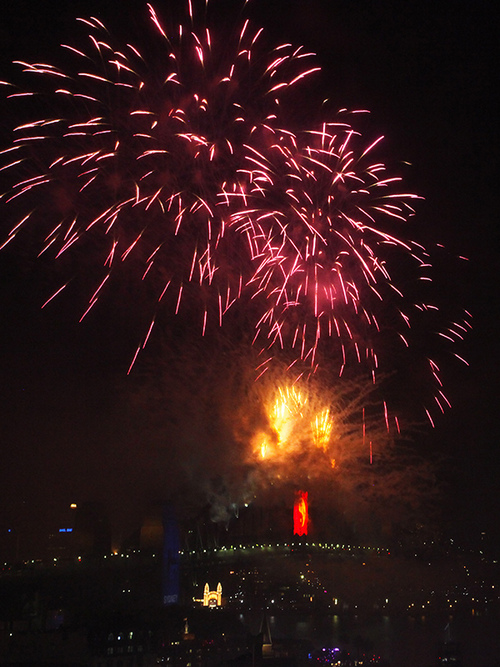
This image would look best when printed on a hyper-glossy paper, which would bring out the contrast and colours in the fireworks.