Photo Review Reviews section

FIRST LOOK: Panasonic Lumix DMC-GX1

A feature-rich, customisable, G-Micro series camera designed for photo enthusiasts.The latest addition to Panasonic’s popular Lumix G Micro System range has been designed to provoke interest among photo enthusiasts. The new GX1, which will be available locally early in 2012, is the company’s most feature-rich and photographer-friendly model to date. Equipped with the 16-megapixel Live MOS sensor introduced in the G3, it boasts a new rangefinder design, a mode dial and several customisable controls.

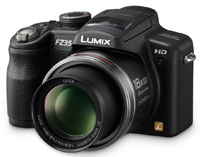
FIRST LOOK: Panasonic Lumix DMC-FZ35

An advanced digicam with a fast, 18x zoom lens plus support for raw file capture and AVCHD Lite HD video recording capability.Panasonic’s new DMC-FZ35 Lumix camera replaces the popular FZ28 at the top of the super-zoom line-up and offers P, A, S and M shooting modes to please photo enthusiasts, along with AVCHD Lite HD video recording. This ‘First Look’ is based upon a pre-production unit supplied by Panasonic Australia; it will be updated with Imatest results and sample images once a production unit has been supplied.

Panasonic Lumix DMC-LX3

9 Rating

A compact, rangefinder-style digicam with a fast, wide-zoom lens and support for raw file capture.Successor to the popular DMC-LX2 model, the Panasonic DMC-LX3 represents a significant upgrade to its predecessor. Panasonic claims to have improved ‘every component’ to deliver a camera that will appeal to DSLR photographers who want a capable compact camera with all the necessary features and functions as a complement to their main camera.

Olympus Tough Lite 790SW

8 Rating

A slim, point-and-shoot digicam that is waterproof to three metres and also shockproof, crushproof and ‘snowproof’.Available in three colours (Arctic Silver, Midnight Black and Sunset Orange), the Olympus Tough Lite 790SW adds some new capabilities to the traditional Mju series features and controls it provides. It has a metal body that is built for demanding conditions and can be used at depths of up to 3m without a protective waterproof housing and also withstand being dropped from heights up to 1.5 metres. In addition, it can function at temperatures down to -10 degrees Celsius, making it suitable for anyone who participates in winter sports or travels to the colder parts of the world.

Olympus Camedia AZ-1

Sturdily built with a large LCD monitor, the Olympus Camedia AZ-1 combines some nice picture-taking facilities with superb picture sharing. Played-back photos and video clips look great on the large screen, which is bright and easy to view – even by several people at once. Only two controls adorn the back panel: the wide and tele rockers and the menu/OK button. The right side panel carries the on/off switch, still, movie and playback slider, and back/next toggle. A wheel accesses menu settings and the shutter button is elevated at one end.

Olympus Mju 500

Featuring a weather resistant metal body, 5-megapixel CCD and large ‘HyerCrystal’ LCD monitor the Mju 500 is a third-generation model in Olympus’ premium point-and-shoot range. The lens tucks behind a snug-fitting circular barrier, leaving the camera’s front surface smooth and flat. The button controls are small but well positioned, with a low profile that doesn’t gather pocket lint or other undesirable detritus, yet in no way hampers ease of use.

Olympus E-520

9 Rating

An affordable, compact DSLR camera with built-in image stabilisation and live view support.Like the recently-released E-420, the new Olympus E-520 is an update of a previous model and doesn’t introduce any radically new features or functions. The tenth Olympus DSLR and the third in the 500 series, it has the same 10-megapixel imager as the E-510 with a few tweaks to the stabilisation and autofocus systems to improve handling and performance. Like its predecessor, the E-520 is targeted at photo enthusiasts.

Olympus E-510

9 Rating

A well-built, easy-to-use Four Thirds System DSLR with built-in dust minimisation and image stabilisation facilities.The differences between the Olympus E-510 and the E-410 model we reviewed last month are largely physical, but the less obvious, internal differences are highly significant. Targeted at more knowledgeable photographers, the E-510’s body is larger and 85 grams heavier, thanks to the addition of a built-in imager-shift stabilisation system. Its battery has a slightly higher capacity, supporting roughly 100 shots more per charge than the E-410’s. Otherwise the two cameras’ specifications are identical.

Olympus E-410

8.5 Rating

A well-built, ultra-compact DSLR camera with some excellent features for novice users.The smallest DSLR on the current market, the Olympus E-410 is 100 grams lighter than its nearest rival and offers 10-megapixel resolution. Targeted at ‘Everyday’ photographers (i.e. novice DSLR users), it’s as easy to operate as many long-zoom digicams but has the benefit of producing much better pictures, thanks to its significantly larger image sensor. Developed by Panasonic, this ‘LiveMOS’ sensor uses CMOS technology and has been developed to allow photographers to compose and capture shots with the camera’s 2.5-inch LCD.

Olympus E-5

8.5 Rating

A new flagship DSLR with upgraded resolution and image processing plus a larger, higher-resolution monitor.When Olympus unveiled its E-5 DSLR shortly before Photokina in mid-September 2010 it was seen as an affirmation of the company’s commitment to the Four Thirds System format. Despite a gap of three years between E-series models, the E-5 has the same rugged body as the E-3 and many similar (or identical) features. Overall, it can be seen as a relatively modest upgrade.