Photo Review Reviews section

Sony Alpha NEX-5

8.5 Rating

A distinctively-styled, ultra-compact, interchangeable-lens camera that can record Full HD video clips with stereo soundtracks.Although Sony claims its new NEX-5 as the world’s smallest and lightest interchangeable-lens camera, this can only apply to the camera body itself, which is similar in size and shape to Sony’s H-series digicams. Attach the low-profile E 16mm f/2.8 (SEL16F28) ‘pancake’ lens and the camera remains just pocketable; fit the E 18-55mm f/3.5-5.6 (SEL1855) zoom lens and you’d be hard pressed to get the camera into a jacket pocket.

Sony Alpha NEX-3

8.5 Rating

A sister model to Sony’s NEX-5 interchangeable-lens camera with the ability to record 720p HD video clips with stereo soundtracks.The main difference between Sony’s NEX-3 and the more expensive NEX-5 model we reviewed in June lies in the video recording system. Whereas the NEX-5 uses the AVCHD format and can record Dolby Digital soundtracks, the NEX-3 uses the less efficient MP4 compression system for video and MPEG-4 AAC-LC for audio. The NEX-5 is also Full HD (1920 x 1080 pixels) compliant while top video resolution for the NEX-3 is 1280 x 720 pixels.

Sigma DP2

8 Rating

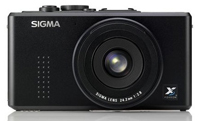
A pocketable, advanced digital camera with a large Foveon X3 Direct Image Sensor and few automated functions.Although many photo enthusiasts have been looking forward to Sigma’s DP2 since the camera was first revealed at Photokina 2008, we’ve had to wait almost eight months to see a review unit. Physically and technologically similar to the original DP1 model (which Photo Review reviewed in March 2008), the DP2 comes with a standard-range lens that is considered more suitable for snapshots and portraits.

Sigma DP1x

7 Rating

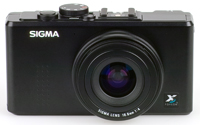
A pocketable camera with a large Foveon sensor that delivers rich, natural-looking colours plus a wide dynamic range and supports raw file capture.Sigma’s DP1x features the same 20.7 x 13.8 mm Foveon X3 sensor and wide angle lens as Sigma’s first large-sensor compact camera, the DP1, which was released just over three years ago. This recent update is largely cosmetic and combines the rear panel interface design of the DP2s with the True II processor from the DP2. It also introduces a revised autofocusing algorithm.

Sigma DP-1

8.5 Rating

The first compact digital camera with a relatively large image sensor.We’ve been waiting for Sigma’s DP-1 digital camera for approximately 18 months. First announced at Photokina in September 2006, it has been withheld from the market through what Sigma describes as “unforeseen image quality problems which resulted in a requirement to change the specification of the camera’s imaging pipeline”. But it’s here now – and a very interesting camera it has turned out to be.

Pentax X70

8 Rating

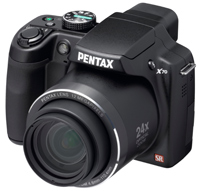
Pentax’s first super-zoom digicam offers high-speed continuous shooting and 720p HD video recording.Pentax enters the competitive super-zoom market with the X70, a 12-megapixel digicam with an advanced suit of controls and a 24x optical zoom lens. Covering a focal length range equivalent to 26-624mm in 35mm format, the lens boasts a fast f/2.8 maximum aperture at the widest position and the camera includes an ‘Intelligent Zoom’ function that can extend magnification to 150x, providing an equivalent focal length of approximately 3900mm at VGA resolution. Sensor-shift image stabilisation and a 2.7-inch monitor are other key features.

Panasonic Lumix DMC-LX5

8.5 Rating

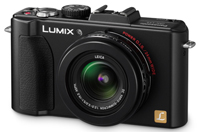
An upgrade to Panasonic’s popular enthusiast digicam flagship with improved ergonomics, autofocusing and image quality.The enthusiast digicam market has changed in the two years since Panasonic released its popular DMC-LX3 Lumix digicam and the new LX5 model faces tough competition both from high-end digicams from other manufacturers and the new Micro Four Thirds cameras released by Panasonic and Olympus. To meet this challenge, Panasonic has improved the user interface on the LX5 and increased the range of the zoom lens to the equivalent of a 90mm lens in 35mm format.

Panasonic Lumix DMC-GH2

8.5 Rating

A mirrorless camera with SLR-like styling, touch-screen controls and sophisticated video recording capabilities.Although it was announced at Photokina 2010, we only received a review unit for the Panasonic GH2 at the end of January, which is a pity as this camera has plenty to offer to Photo Review readers. Replacing the DMC-GH1, it offers higher resolution and an extended ISO range as well as adopting popular features from the DMC-G2including the touch-screen monitor and re-designed control layout.

Panasonic Lumix DMC-GF1

9 Rating

A compact, rangefinder-styled Micro Four Thirds System camera that accepts interchangeable lenses.In the GF1, Panasonic has challenged Olympus with a similar, rangefinder-like model that tackles some of the deficiencies of the E-P1 and exploits the not insignificant potential of the Micro Four Thirds (M4/3) sensor format. In addition, by providing HD video recording – using the AVCHD Lite format offered in the company’s digicams, the GF1 also confronts the main criticism levelled at the G1: the lack of video capture.

Panasonic Lumix DMC-G10

9 Rating

Most of the features of the DMC-G2 in a lighter, more affordable camera body.Attach the LCD monitor to the back panel, remove the touch screen overlay, reduce the viewfinder resolution to 202,000 dots and disable the stereo sound recording capability and you’ve converted the Panasonic Lumix DMC-G2 into the DMC-G10. You’ve also saved $300 in the process. In this review, we’ll focus on the differences between the two cameras, as shown in the table below.