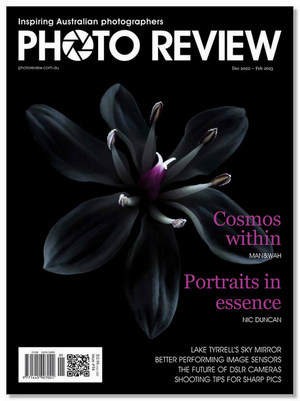
This inland salt lake in northern Victoria has become a popular destination for photographers and social media users for its many photo opportunities.
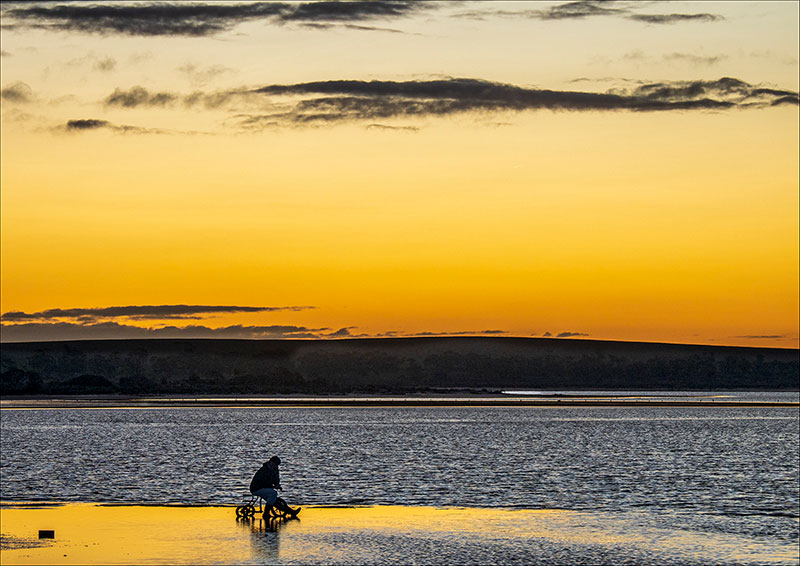
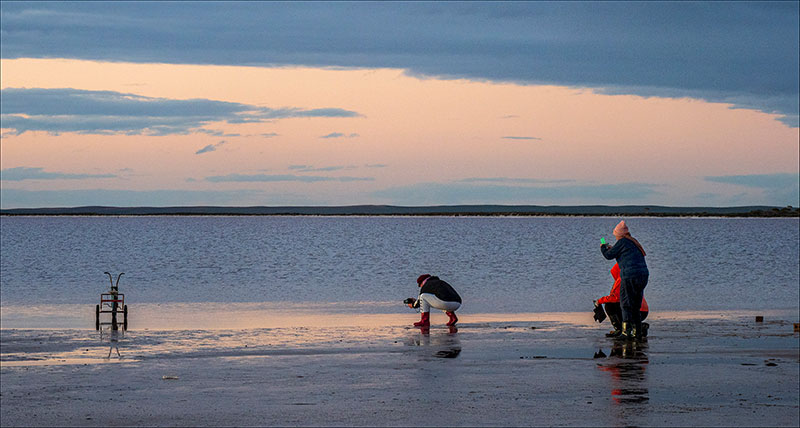
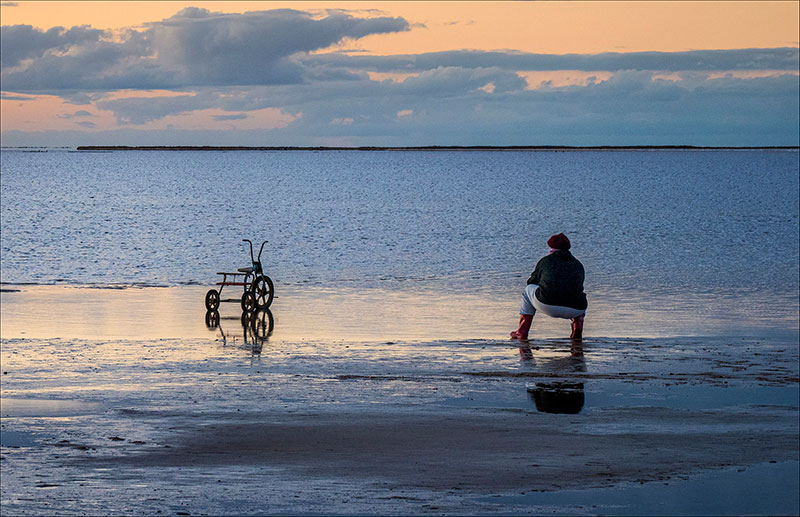
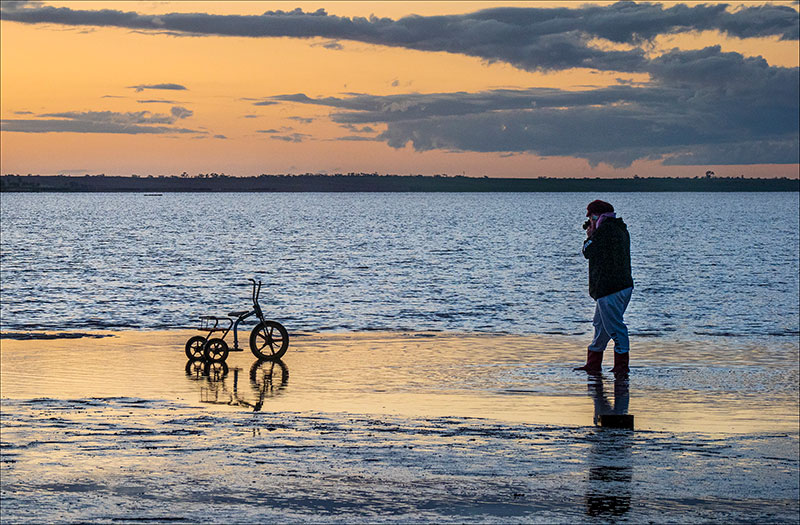
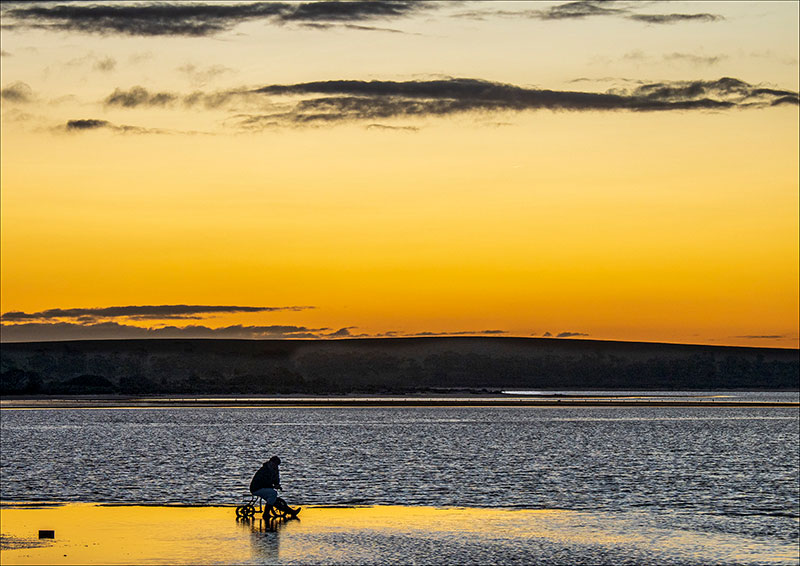
Lake Tyrell sunset. (See below sequence of shots taken over a seven minute period around sunset.)
Why visit?
Lake Tyrrell, Victoria’s largest salt lake, is a shallow, salt-crusted depression seven kilometres north of the town of Sea Lake in the Mallee district of north-west Victoria. This location has become a popular destination to photograph the lake’s mirror-like surface during winter, when groundwater percolates to the surface and inflows arrive from the Avoca River/Tyrrell Creek system.
There is evidence of the indigenous occupation of the area over the last 45,000 years. The Boorong Aboriginal people of the area are known for their interest in star-lore and the name ‘Tyrrell’ is derived from the local Wergaia word for ‘sky’.
Many people visit the lake on clear nights to photograph the Milky Way. There is a viewing platform and information bay on the Sea Lake side of the lake and also a raised platform with a circle of metal recliners on which visitors can relax and observe the sky.
Small islands in the lake are used by visiting seagulls as nesting sites and the saltbush and samphire around the lagoon support wildlife such as birds, reptiles, kangaroos and emus. The lunette to the east of the lake contains significant Aboriginal relics.
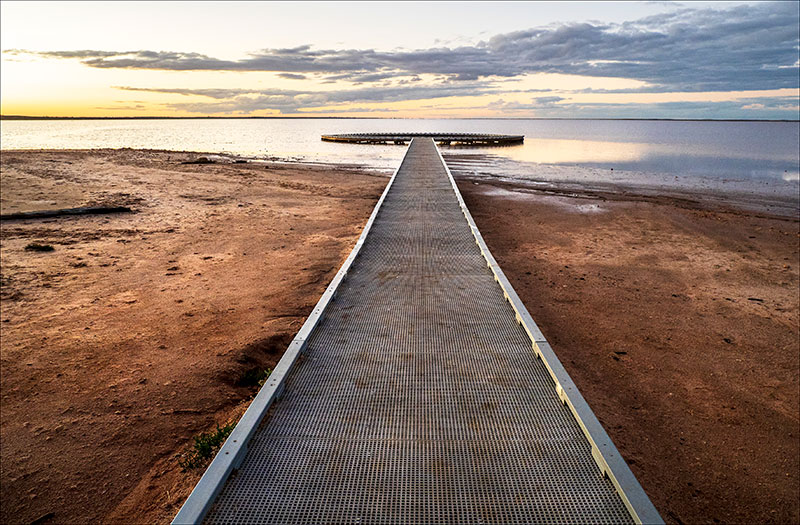
The viewing platform that extends into the lake, photographed in the warm afterglow just after sunset.
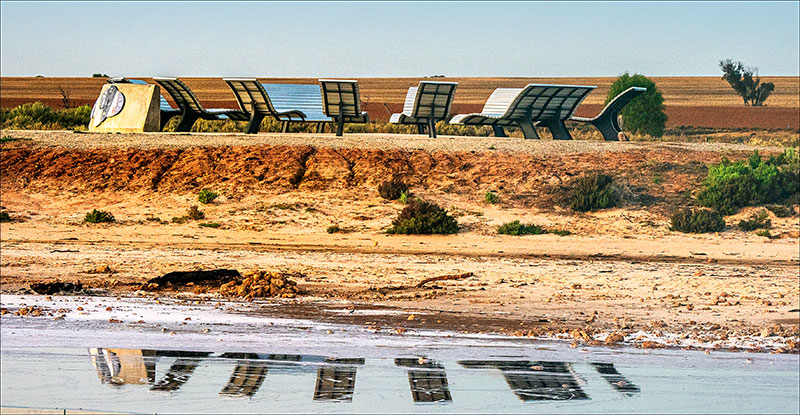
The ‘Sky Lounge’ circle of metal recliners beside the lake, which invites visitors to relax and watch the night sky. Note the reflections in the water in the foreground.
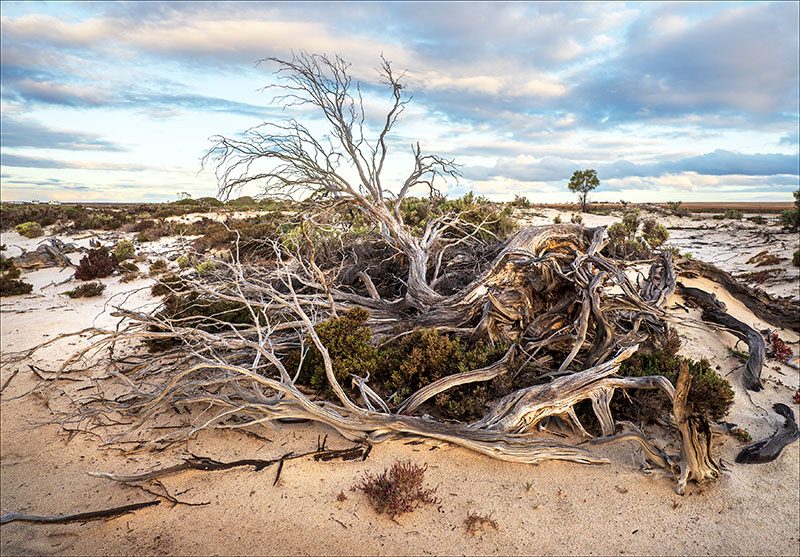
This shot, taken a little before sunset, shows the tangle of living and dead vegetation that can be found if you venture away from the information bay and around the shoreline.
When to go
The lake is accessible at all times and no entry changes apply. Most photographers prefer to visit it around sunrise and sunset as these are the best times for taking photos.
The best time is usually considered to be during winter – between June and August – when the Lake is most likely to be filled with water. This produces the reflections that have caused locals to name the lake the ‘Sky Mirror’. From September the algae in the lake begin to turn the salt an iridescent pink and between December and February the water levels are low (or non-existent) and the lake is covered with pink salt crystals.
It can become very hot during the day in the summer and very cold at night during the winter so adequate precautions should be taken if you visit during those times.
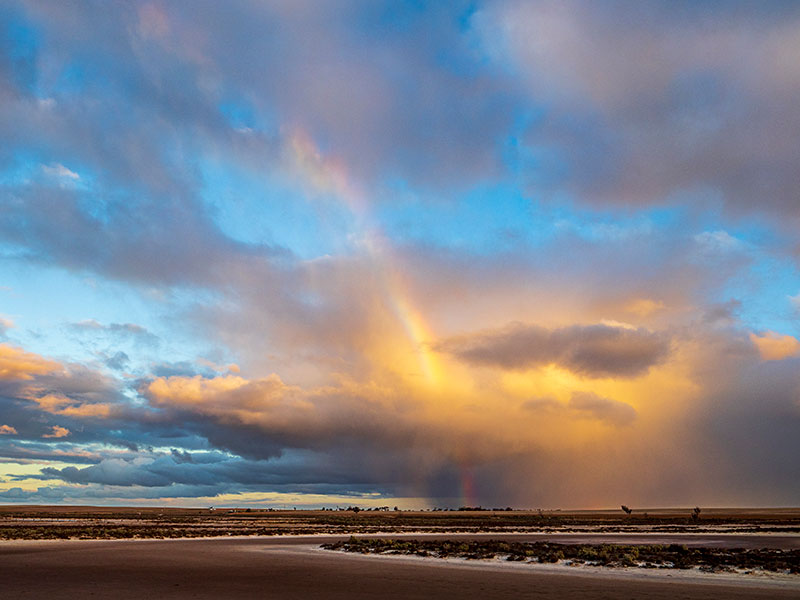
Inclement weather can create great conditions for landscape photography, particularly if there are rainbows in the sky.
Getting there and getting around
Lake Tyrrell is located just off the Calder Highway, seven kilometres north of the township of Sea Lake. It’s roughly a four-hour drive from Melbourne or a two hour drive from Mildura. The turn-off from the highway is well signposted and on right-hand side of the road as you are driving north.
There’s no public transport in the area but a local company, Sea Lake Tyrrell Tours, runs guided tours from Sea Lake. Visitors coming in their own vehicles should follow the road past the visitors’ centre on the upland above the lake down to the left and along the unsealed road to the small parking area near the information bay.
Visitors are prohibited from driving on the surface of the lake; and no camping or overnight parking is allowed. Dogs are permitted on a lead.
From the parking area all further exploration must be on foot. It’s worth walking along the shores of the lake and there are walking tracks and raised duckboards to keep your feet dry when crossing swampy areas. You can also walk around the lake itself.
The lake is very shallow most of the time so if you wear gumboots it’s possible to walk out into the lake where the surface is firmer. But be careful as it’s easy to get stuck in the mud and footprints can also spoil other photographers’ opportunities to capture the smooth surface of the lake.
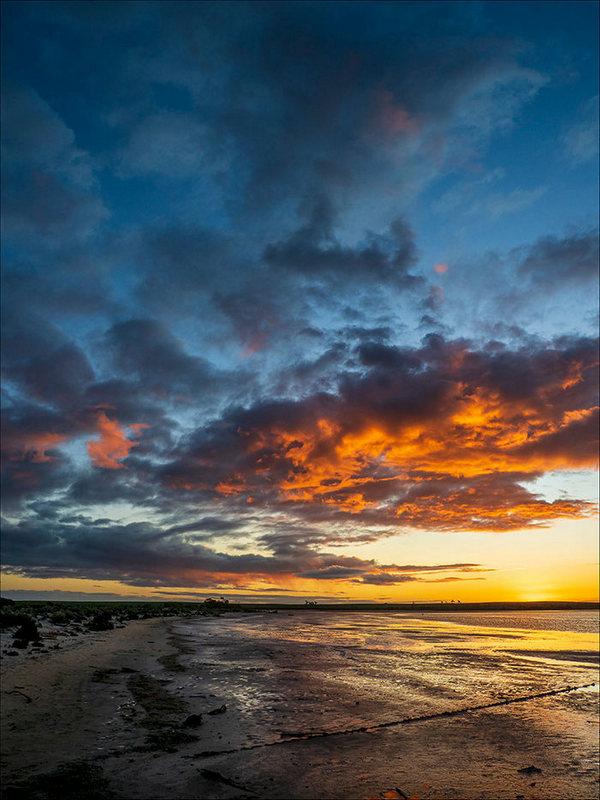
Taken with a 16mm equivalent wide angle lens, this photograph is an example of some of the conditions you can find if you are at the lake around sunset during the autumn months.
Where to stay
Most visitors stay in Sea Lake, where options range from the Sea Lake Travellers Rest
camping grounds to a variety of hotels, motels and villa accommodation. The Royal Hotel in Best Street, Sea Lake combines a friendly country pub with accommodation and an on-site restaurant. There are also a number of holiday homes and Airbnb bookings available in Sea Lake.
The Green Lakes campsite, a community-operated venture about 10 km south of Sea Lake, is another option for campers and caravanners. It has good facilities and plenty of sites around a small artificial lake, which was constructed for fishing and water sports.
This shot, taken a little before sunset, shows the tangle of living and dead vegetation that can be found if you venture away from the information bay and around the shoreline.
What gear to take
The equipment you take will depend on what you want to photograph and the time(s) of day you plan to be taking pictures. If you just want to explore the area, we recommend a single camera body plus an extended-range zoom lens. Most of the photographs used in this feature were taken with 24-200mm equivalent zoom lenses.
Wide angle lenses will be useful for capturing shots of the night sky and you’ll probably need a tripod for longer exposures after dark. Telephoto lenses will be essential for photographing wildlife, which is generally quite shy.
Keep your kit simple if you plan to explore the area. Weather-resistant cameras and lenses are recommended in the cooler months, which are usually the wettest.
The lake is a great place for drone photography, although you’ll need to keep your device well controlled. If it crashes into the lake it could be very difficult to recover.
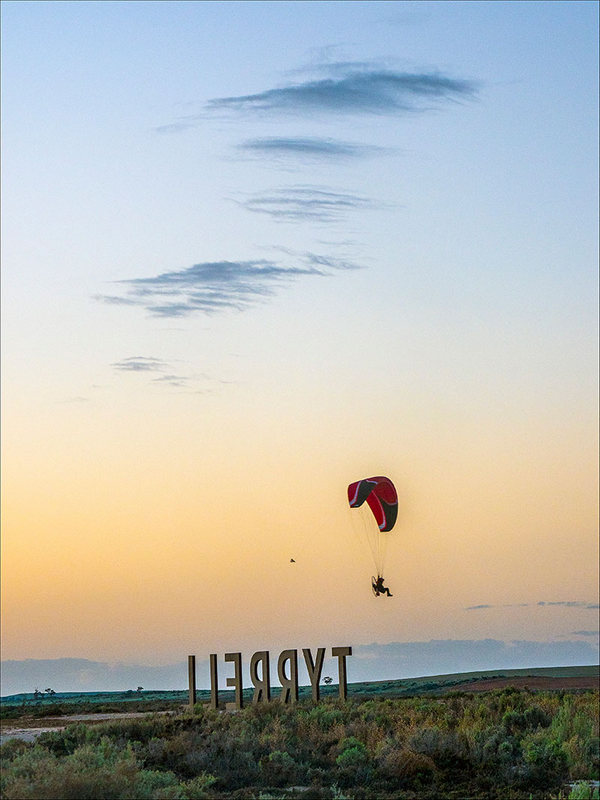
Just before sunrise, a paramotorist enjoying the view over the Lake Tyrrell sign at the edge of the lake.
Shooting tips
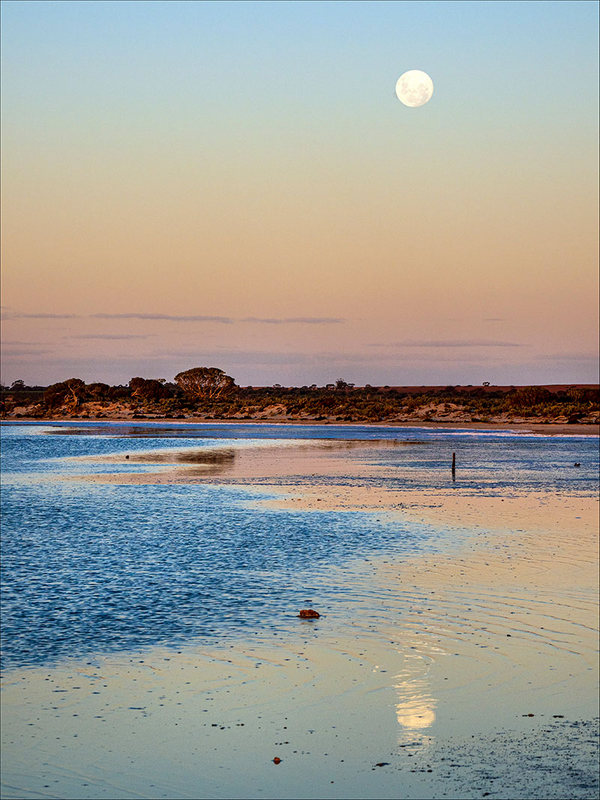
Arrive early and leave late to ensure you make the most of your time at the lake. Visiting when there’s a full moon gives you opportunities to capture interesting reflections of the moon in the mirror-like water. Moonlit nights will also extend the time you can keep on taking pictures – especially if your equipment is stabilised.
Look for reflections and watch what other visitors are doing (some of their activities may be worth recording). Be prepared to walk along the shoreline to get the shots most other people will miss.
If you’re shooting in the middle of a bright, cloudless day watch out for blown-out highlights and blocked-up shadows. Check the histogram in playback mode and adjust exposures to keep the scene’s brightness range within the graph.
Shoot raw files and/or try out your camera’s HDR settings. Many cameras provide dynamic range adjustments in their shooting menus and it’s worth trying them out – although you may need to experiment with different settings to obtain the result you want.
Take advantage of adverse weather conditions – but be aware that there’s very little shelter at the lake. Cloudy skies can add a lot to your pictures and when the sky begins to clear a rainbow or two can really enhance the scene.
Don’t be disappointed if it’s too windy for you to take photos of reflections; the wind can blow up salt to produce interesting patterns along the shoreline. And if it’s windy in the afternoon, think about going back to the lake in the early morning, when conditions are more likely to be still.
This sequence of shots was taken over a seven minute period around sunset, showing some interactions between people and the lake:
Article by Margaret Brown (see Margaret’s Photo Review pocket guides)
Excerpt from Photo Review Issue 94