

In summary
A compact and lightweight, fast standard prime lens with an affordable price tag that makes a decent walk-around lens for full-frame Canon RF-mount cameras.
Full review
Launched concurrently with the EOS R6 III, the RF 45mm f/1.2 STM is Canon’s first f/1.2 aperture non-professional RF lens. Designed for entry-level photo enthusiasts and affordably priced at an RRP of AU$699, it is equally suitable for stills and movie shooting. This lens is constructed mainly from polycarbonate but with a metal mount. It’s not stabilised, lacks weather-resistance and can’t focus closer than 45 cm from subjects but its relatively low price and separate focus and control rings could be welcomed by cash-strapped shooters who want a fast prime lens with a perspective close to that of human vision. We reviewed it on the EOS R6 III body, which is reviewed separately.
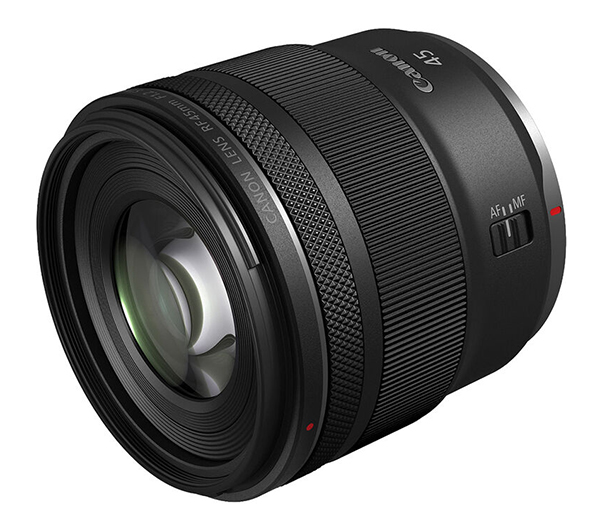
Angled view of the RF 45mm f/1.2 STM lens. (Source: Canon.)
The optical design of this lens is quite basic – and a little old-fashioned. It has nine elements arranged in seven groups and includes a single, PMo (plastic-moulded) aspherical element, similar to the one used in the RF 50mm f/1.8 STM lens.
The rear-lens focusing system is driven by a gear-type stepping motor (STM) with magnetic detection, which is also somewhat dated. It’s not the fastest or most precise operating mechanism but Canon claims it can deliver smooth and near-silent autofocusing.
Also on the positive side, the length of the lens doesn’t change and the front element doesn’t rotate during focusing, which allows angle critical accessories to be attached via the 67 mm filter thread. Nine diaphragm blades produce a rounded lens aperture for smooth, circular blurring at wide apertures.
Who’s it For?
This lens attracted a lot of attention when it was first announced on 6 November, 2025, largely because of its wide maximum aperture and relatively low price tag. It’s also quite small and light for such a fast, full-frame prime lens so, obviously some compromises have been made to achieve the product we’ve reviewed here at this price point.
Although this lens is mainly constructed from engineering plastic it’s build quality is reasonably good. It has a short, fixed-length 75 mm barrel and a minimum focusing distance of 45 cm, which rules out a fair bit of close-up work.
And while it is supplied with front and rear caps no lens hood is provided. Instead, as is common with Canon’s entry-level lenses, the Canon ES-73B lens hood is offered as an optional accessory. The branded product is selling for between AU$72 and $95, but cheaper, third-party alternatives are available.
The 45mm focal length fits between the standard 35mm and 50mm angles of view. In particular, it represents an affordable lightweight alternative to Canon’s professional-quality RF50mm f/1.2L USM lens, which has an RRP of AU$4099 and weighs 950 grams. The MTF graphs below show how the measured performance of the RF 45mm f/1.2 STM gives a good indication of what to expect for a lens at its price point.

This set of MTF graphs compares the RF 45mm f/1.2 STM lens with some of Canon’s popular 50mm prime lenses. (Source: Canon Rumors.)
Canon also offers lower-priced, but slower 50mm prime lenses, with the RF 50mm f/1.4L VCM, which is half a stop slower at $2429 and the RF 50mm f/1.8 STM, which is one stop slower, weighs only 160 grams and is priced at $389 by way of comparison. It also has two RF 35mm lenses: the RF 35mm f/1.4L VCM prime lens with an RRP of $2699 and weight of 555 grams and the RF 35mm f/1.8 IS Macro STM lens, which weighs 305 grams and has an RRP of $989. The RF 45mm f/1.2 STM lens is the only 45mm lens with an RF mount that Canon offers so far.
Build and Ergonomics
As noted above, the RF 45mm f/1.2 STM lens is made mainly from polycarbonate plastic around an inner core with a metal mount. This is standard practice for Canon’s entry level lenses and the RF 50mm f/1.8 STM has a similar design, although its optical configuration is simpler with six elements in five groups.
The front element is recessed by almost 10 mm and has a diameter of approximately 40 mm. It is surrounded by a 13 mm wide double ring of fine ridging leading to the threading for 67 mm diameter filters.
A bayonet fitting around the outer surface of the filter fitting accepts the optional ES-73B lens hood. Behind this fitting is a 6 mm wide branding ring that carries the name of the lens and ends in a narrow, faux-metal ring, behind which is the 8 mm wide control ring, which is covered with a cross-hatched grip band.
The control ring can be programmed to handle one common function, such as shutter speed or aperture adjustment. It has click stops to give users a sense of how much it’s being turned but it can be de-clicked by Canon’s service technicians – for a fee.
A 5 mm wide band separates the focusing ring from the control ring. The focusing ring is 20 mm wide and completely covered with narrow ridges. It’s driven electronically from the camera but supports full-time manual focus over-ride. Focusing is slower in movie mode than for stills shooting.
The outer barrel curves inwards along the leading edge of a 24 mm wide band that sits between the focusing ring and the lens mount. It has an AF/MF slider switch and the Canon brand name and 45 printed on it. Ending in two shallow lobes, it overlaps the lens mount, with one of the gaps between lobes carrying a red index mark for aligning the lens with the camera body.
The inner barrel appears to have been made from metal and has a smooth grey finish that overlaps the chromed metal lens mount. Inside the inner barrel is a polycarbonate sleeve that carries 12 gold-plated contacts, which transmit electronic signals between the camera and the lens. The rear element of the lens is recessed by approximately 10 mm inside this inner barrel.
Performance
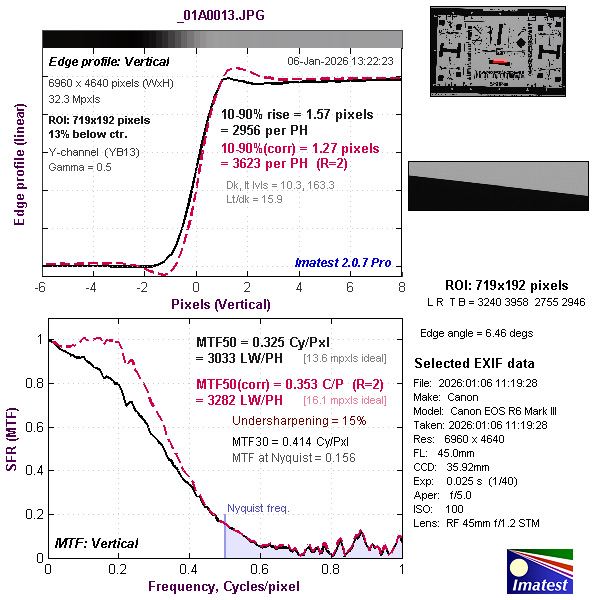
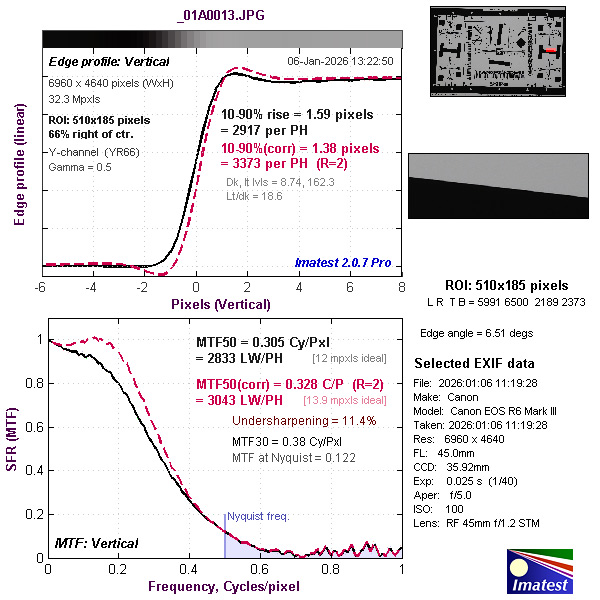
Our Imatest tests were conducted with the EOS R6 III camera body, which is reviewed separately. Unfortunately, while this camera can highlight the best features of this lens, the lens doesn’t provide a lot for it to work with.
That said, going on the other reviews that have been published, we feel we may have been provided with an excellent sample of this lens. The resolution figures we obtained were better than we had expected and test shots confirmed this lens was capable of producing decent images. For its price, it’s a good performer; hence the ‘Recommended’ rating.
We found the best performance was at f/5.0, which is four stops down from the maximum aperture, where resolution in JPEG files just matched expectations for the camera’s 32.3-megapixel sensor – but only in the centre of the frame. Towards the edges and corners, resolution was much lower, although the discrepancies between centre and edge resolution tailed off from about f/4 onwards where overall sharpness could be seen as acceptable until diffraction takes effect.
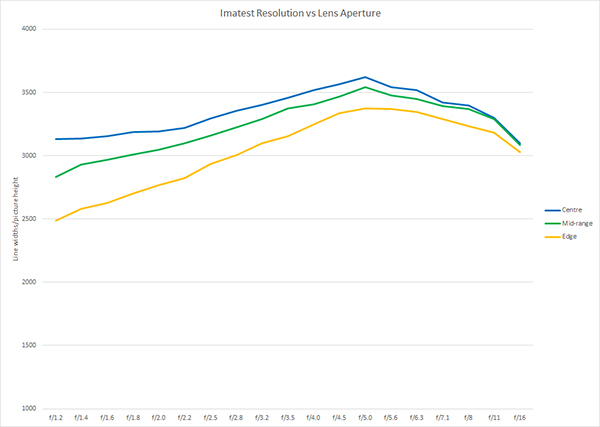
This graph of our test results for JPEG files shows the edge softening at wider apertures plus the effects of diffraction from f/5.6 on. (Similar results, albeit at slightly higher resolution, would be obtained for raw files.)
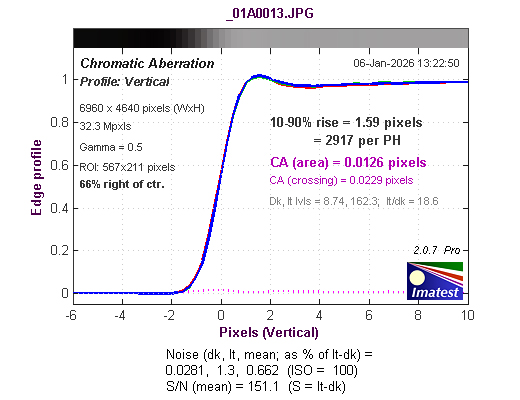
Our new testing regime, which uses a standardised test chart, has made it difficult – and at times, impossible – to provide reliable distance-to-corner values, which were the basis of previous chromatic aberration assessments. In addition, most of the cameras we review will automatically correct chromatic aberration in JPEGs; as does Adobe Camera Raw these days, by default (although you can over-ride the correction).
As a consequence, we’ve changed the basis on which our assessments are made to the CA (area) figures. These show the extent to which coloured fringing appears on either side of a median point, which can vary with lens aperture settings. We believe this approach could provide a better picture of the extent to which chromatic aberration exists.
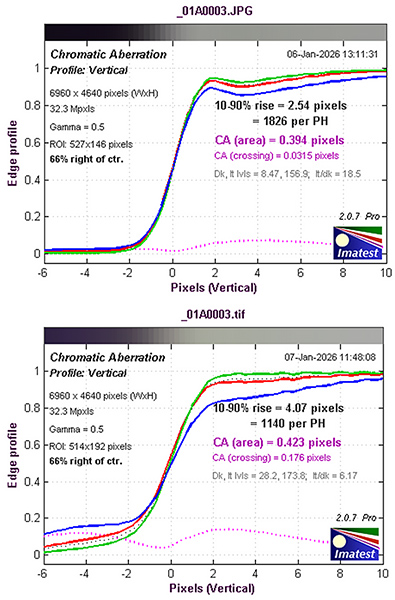
These two graphs compare JPEG (top) and uncorrected CR3.RAW files (below), taken at the same f/1.6 aperture setting. Both are affected by chromatic aberration but the uncorrected raw file clearly shows a greater effect.

By way of comparison, this graph from a JPEG file with the lens stopped down to f/5.6 shows little evidence of chromatic aberration.
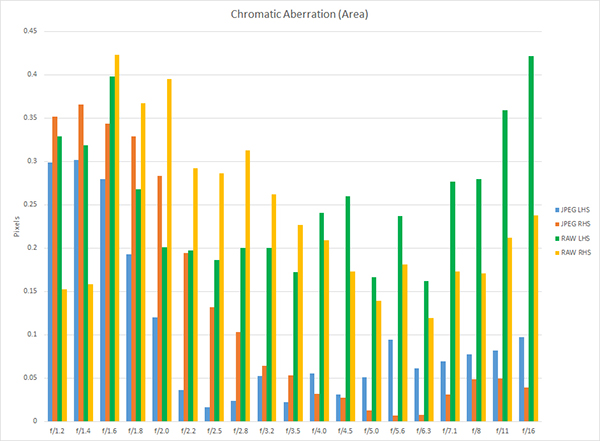
This graph plots the results of Imatest tests of chromatic aberration across the aperture range of the RF 45mm f/1.2 STM lens.
In future reviews we’ll be providing a graph (see example above for the RF 45mm f/1.2 STM lens) which plots the results from JPEG and converted raw files, should also reveal how well the camera’s internal corrections can deal with this matter. In the case of this lens, at mid-range lens apertures, the in-camera corrections will be able to largely eliminate coloured fringing (with a possible exception of the widest apertures).
When the in-camera corrections were disabled, we found noticeable coloured fringing along contrast boundaries, even in cloudy conditions and regardless of which lens aperture is used. While the fringes were mostly purple, when images were magnified to full 100% size there was also some green fringing in places, as shown in the Samples section below.
We found significant – and highly visible – vignetting in uncorrected CR3.RAW shots taken at the widest lens apertures, although it was reduced as the lens was stopped down. Nonetheless, some vignetting remained visible at f/2.5, which is two stops down from the maximum aperture.
JPEGs also showed some vignetting with in-camera corrections disabled, although it was noticeably less than in uncorrected raw files. Fortunately, the in-camera corrections reduce this to a barely visible darkening, which disappears by f/1.6.
As expected, uncorrected CR3.RAW images from the RF 45mm f/1.2 STM lens showed significant barrel distortion. Fortunately, the in-camera auto-correction was able to reduce it to a negligible level.
Autofocusing was very quiet, although STM systems are seldom totally silent so external microphones are advisable if you want to capture ambient sounds while shooting movies. With both stills and movies we found focusing to be fast and generally accurate, provided the correct AF point or area was selected.
There was some evidence of the focus shifting backwards as the lens aperture was stopped down at close focusing distances. It’s not, strictly speaking, ‘breathing’ but relates to residual spherical aberrations and can be reduced when all the in-camera optical corrections are engaged. While not particularly significant for stills shooters, it could become visible in video recordings when focus is ‘pulled’ between close and distant subjects.
Bokeh was variable and not particularly smooth at f/1.2, where even slightly shadowed areas showed some choppiness. We found highlight outlining even in shots taken in low-contrast conditions and instead of being circular, highlights towards the edges of the frame were flattened into ‘cat’s eyes’.
Conclusion
Login or Register to access the full article.
SPECS
Picture angle: 51 degrees 20 minutes
Minimum aperture: f/16
Lens construction: 9 elements in 7 groups (including one PMo aspherical element) plus Super Spectra coating
Lens mount: Canon RF
Diaphragm Blades: 9 (rounded aperture)
Weather resistance: No
Focus drive: Stepping motor
Stabilisation: No
Minimum focus: 45 cm
Maximum magnification: 0.13x
Filter size: 67 mm
Dimensions (Diameter x L): 78 x 75 mm
Weight: 346 grams
Standard Accessories: Front and rear caps
Distributor: Canon Australia
TESTS
Based on JPEG files taken with the EOS R6 III camera.

SAMPLES

Vignetting at f/1.2.
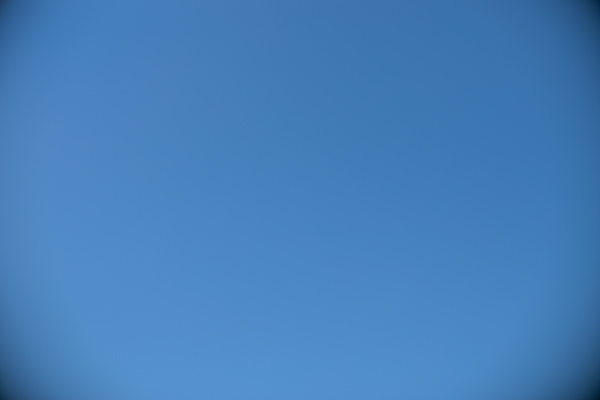
Vignetting at f/2.5.

Rectilinear distortion.
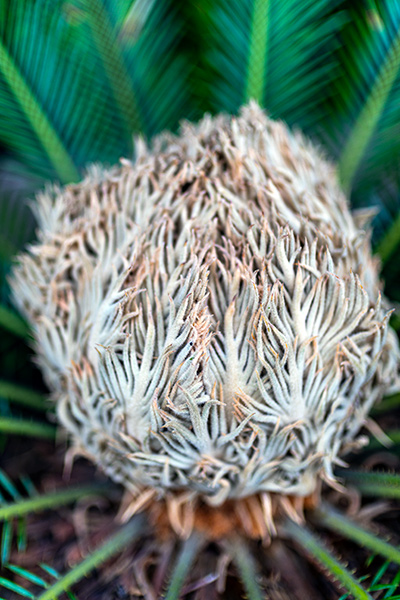
Close-up at f1.2; 1/320 second at ISO 100.
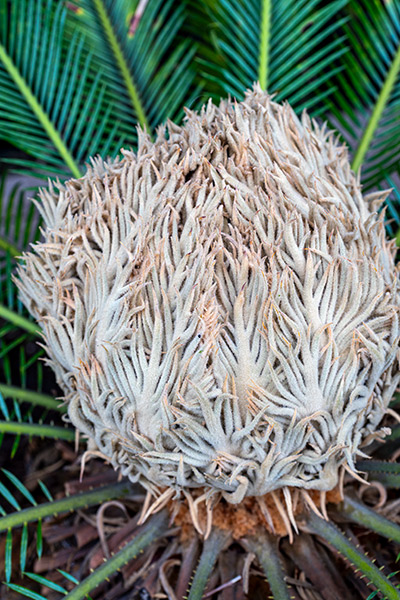
Close-up at f5.6; 1/60 second, ISO 400.
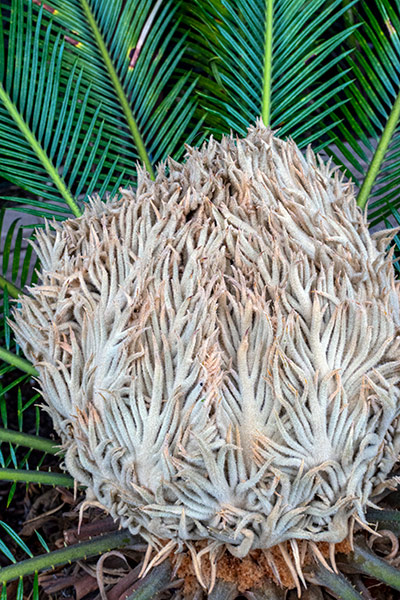
Close-up at f16; 1/30 second, ISO 1000.
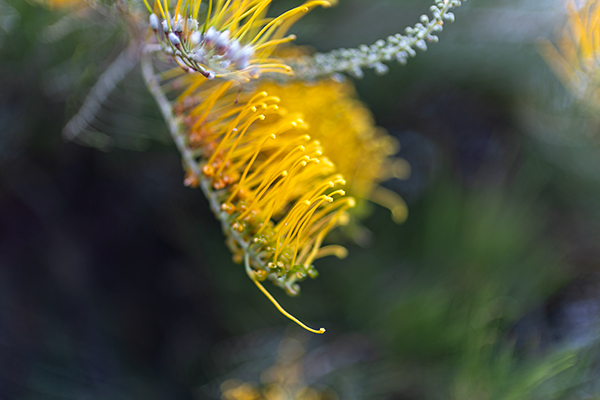
Bokeh in close-up at f/1.2; ISO 100, 1/400 second.
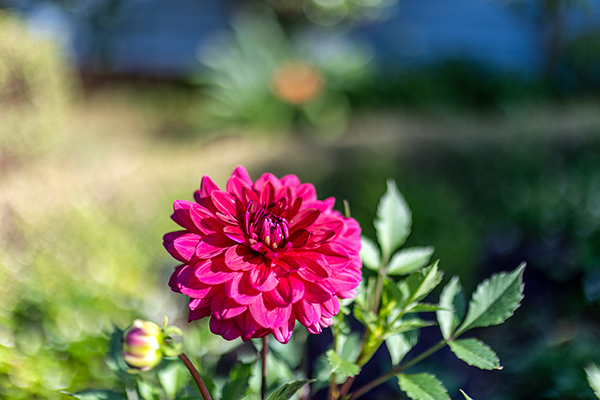
Bokeh in close-up at f/1.2; ISO 100, 1/3200 second.
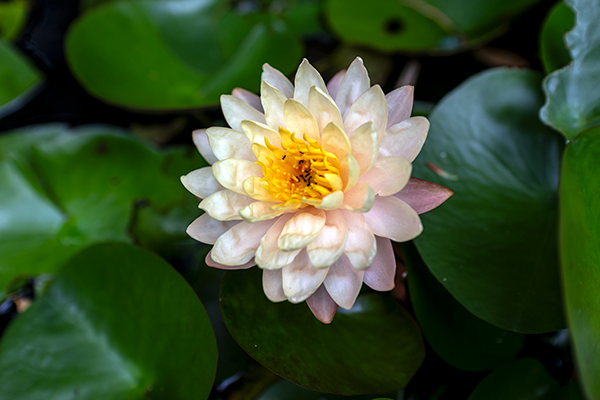
Close-up; ISO 100, 1/800 second at f/2.5.
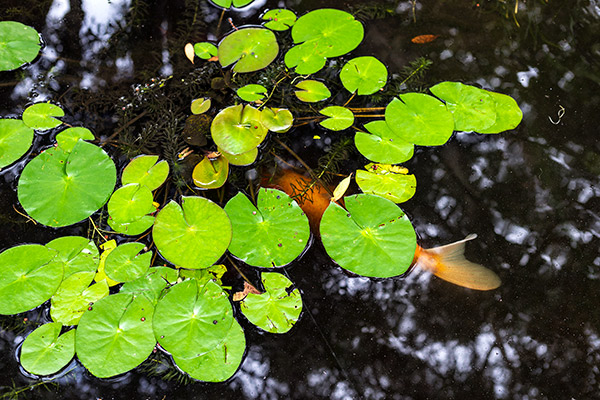
ISO 125, 1/60 second at f/4.

Casual portrait; ISO 100, 1/125 second at f/3.5.

Casual portrait; ISO 100, 1/200 second at f/5.

Sunstars; ISO 125, 1/80 second at f/16.
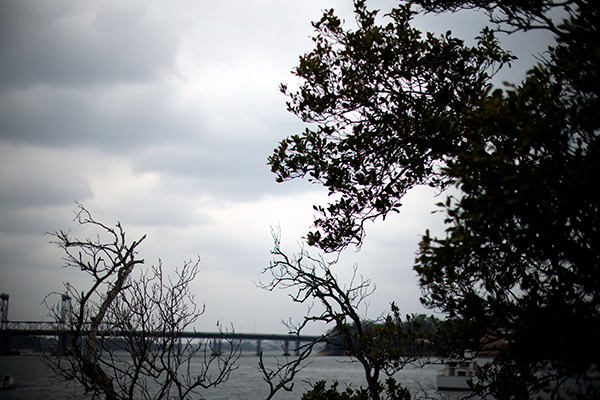
ISO 100, 1/1000 second at f/2.0.
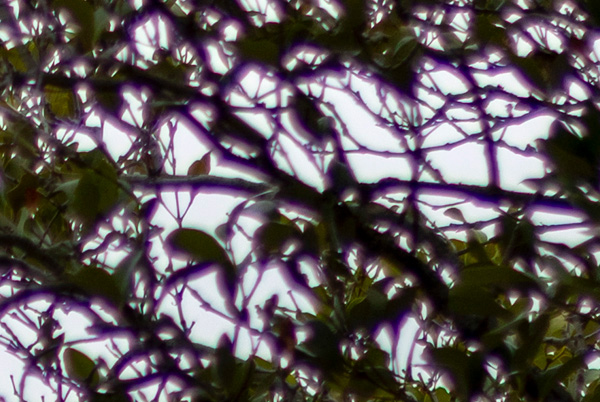
Crop from the above image at 100% magnification showing coloured fringing.
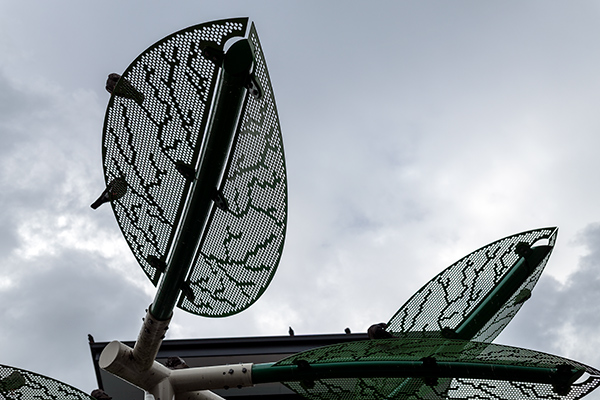
ISO 100, 1/60 second at f/8.
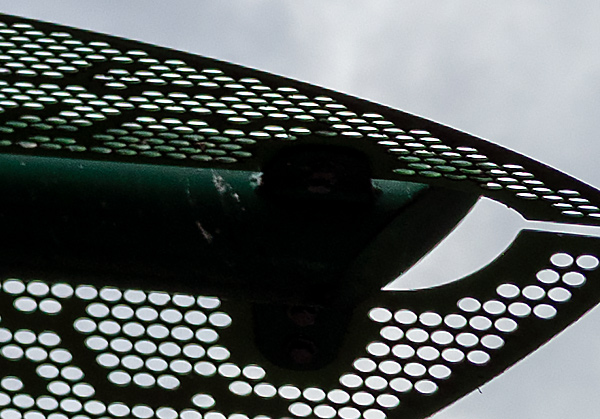
Crop from the corner of the above image at 100% magnification.
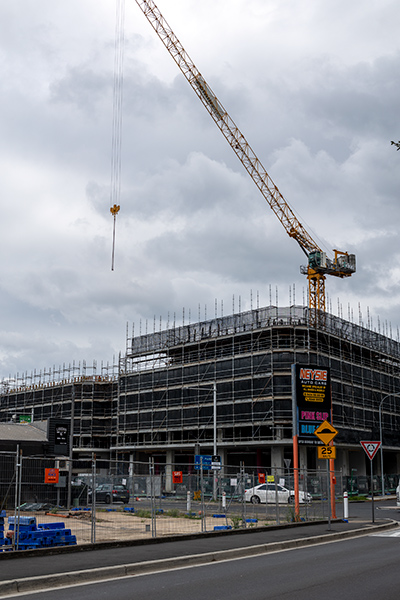
ISO 100, 1/25 second; f/6.3.
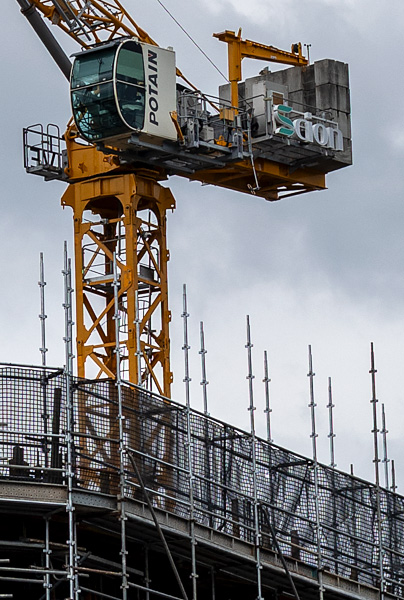
Crop from near the centre of the above image at 100% magnification.

ISO 100, 1/1253 second at f/4.

ISO 125, 1/100 second at f/4.5.
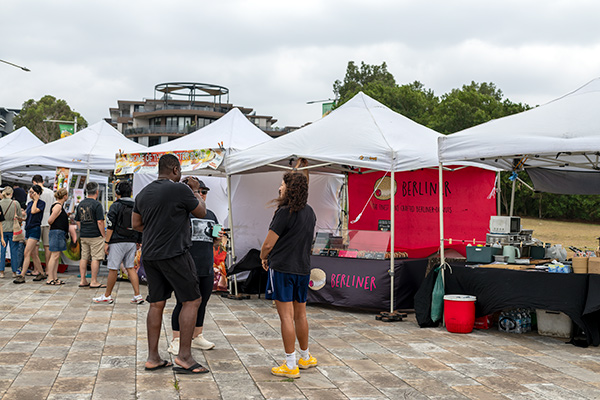
ISO 100, 1/80 second at f/5.6.

ISO 200, 1/125 second at f/5.
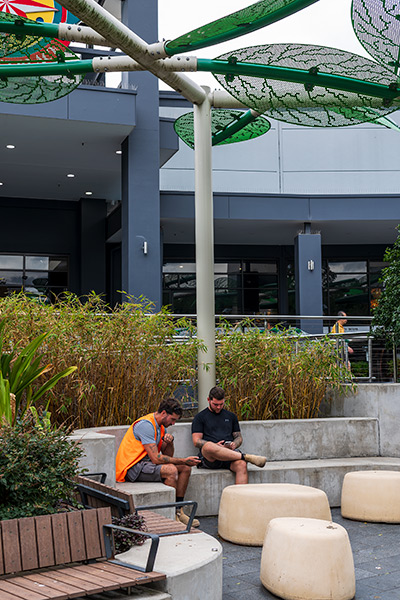
ISO 100, 1/125 second at f/5.6.

ISO 200, 1/250 second at f/7.1.
Additional image samples can be found with our review of the Canon EOS R6 III camera.
Rating
RRP: AU$699
- Build: 8.8
- Handling: 8.8
- Image quality: 8.7
- Autofocusing: 8.8
- Versatility: 8.7
BUY